Collaborative Innovation: A Design Thinking Case Study in Rapid Prototyping

UXPA Design Thinking Workshop


Customer Journey map for the Design Workshop

JOURNEY MAP FROM DESIGN WORKSHOP


Role

Design Facilitator

Project Type

Design Thinking Workshop

Client

UXPA Boston + Northeastern University

Deliverables

Affinity Diagrams, Journey maps

Prologue


Problems

  • Students in graphic design are scared because AI is rapidly changing the job market.

  • The anxiety is real and the future is very uncertain.

  • They worry about having a harder time finding internships and jobs.

  • The UXPA Boston chapter and the Husky Communicators at Northeastern saw this as an opportunity to do
    something about it.

  • How can UXPA Boston help these people out?

  • How can students help UXPA Boston grow their org?

  • Not just to talk about the problem but, to actually put students through the design thinking process.

Objectives

  • Helping students navigate through the issues of finding internships, work and easing the fears about AI.

  • Teaching students the following:

    • Developing empathy and understanding the
      users' needs through journey mapping

    • Generating multiple solutions to a challenge
      through ideation

    • Selecting the best solution through voting

  • Make volunteering a year-round activity for UXPA Boston.

  • A network between UXPA Boston, Husky Communicators, and the Northeastern University Design Community.

Goals

  • Creating more opportunities for people to volunteer and grow the UXPA Boston chapter.

  • Creating an opportunity for Husky Communicators to plan and organize events with sponsors outside Northeastern

  • Establishing a networking opportunity for Husky members and the students to connect with professionals.

  • The idea was to take personal and general experiences and apply design thinking as a problem-solving tool.

  • Completing the workshop and voting on the best solution to their problems.

This workshop is for folks who are curious to learn about human-centered design and how it shapes future programming for the UX community in the Greater Boston Area.
— Rich Le

Define

Research

Create

Test


Define


1

  • The goals were straightforward. For UXPA Boston, it was about making volunteering a year-round activity and building out what volunteers actually want to do.

  • What does UXPA Boston need to offer students who are worried about AI and finding work?

2

  • For Husky Communicators, it was about giving their members a real opportunity to network with professionals and teaching them design thinking as a practical problem solving tool.


Customer Journey map for the Design Workshop

JOURNEY MAP FROM DESIGN WORKSHOP


Research


3

  • This was a 1-day workshop hosted at Northeastern University. About 50 students and 5 UXPA volunteers ( I was one of them).

  • We split into 5 groups with around 5-6 people each. I was leading one of the groups.

  • I was very nervous because I'd never done something like this before.

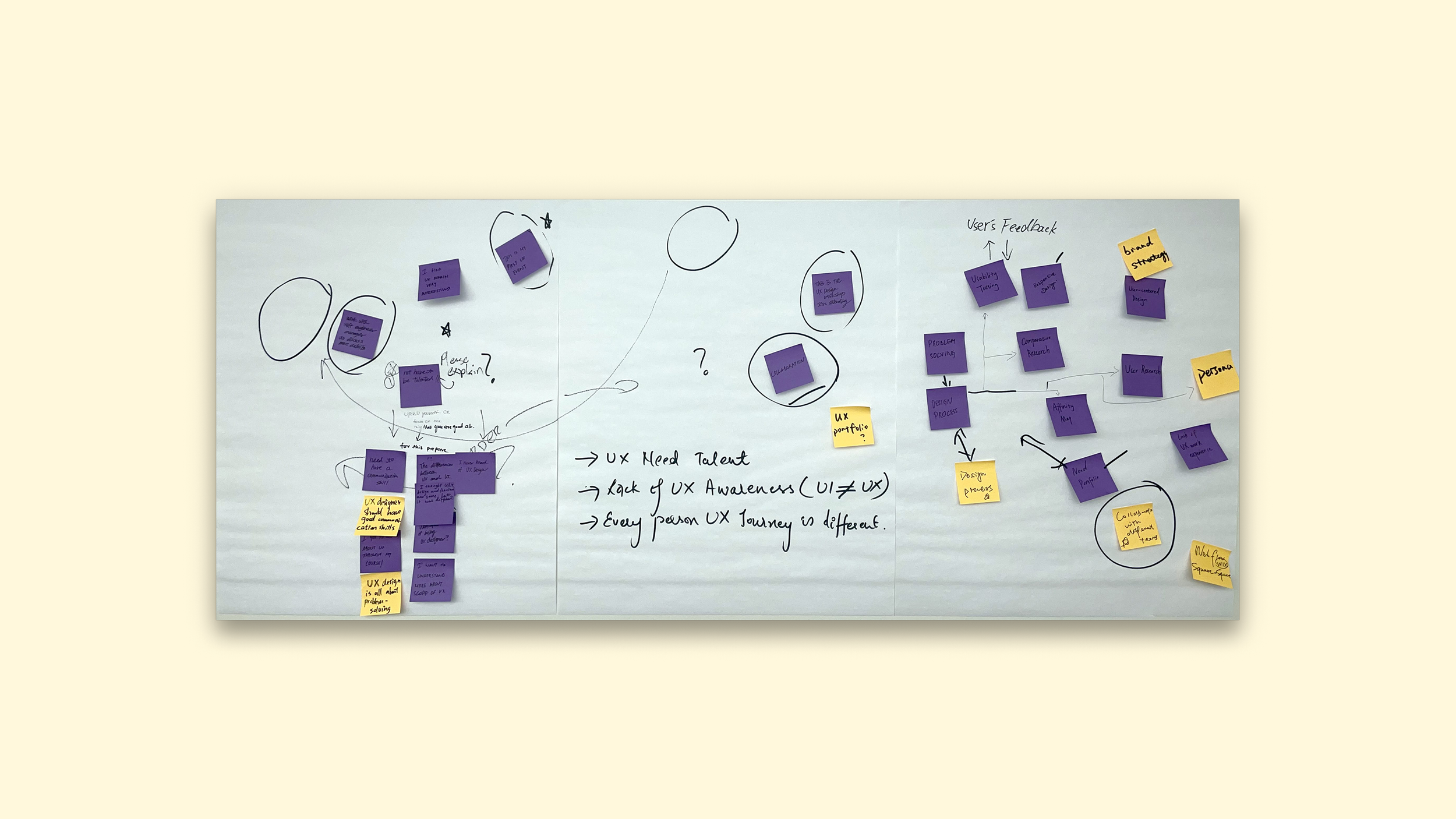
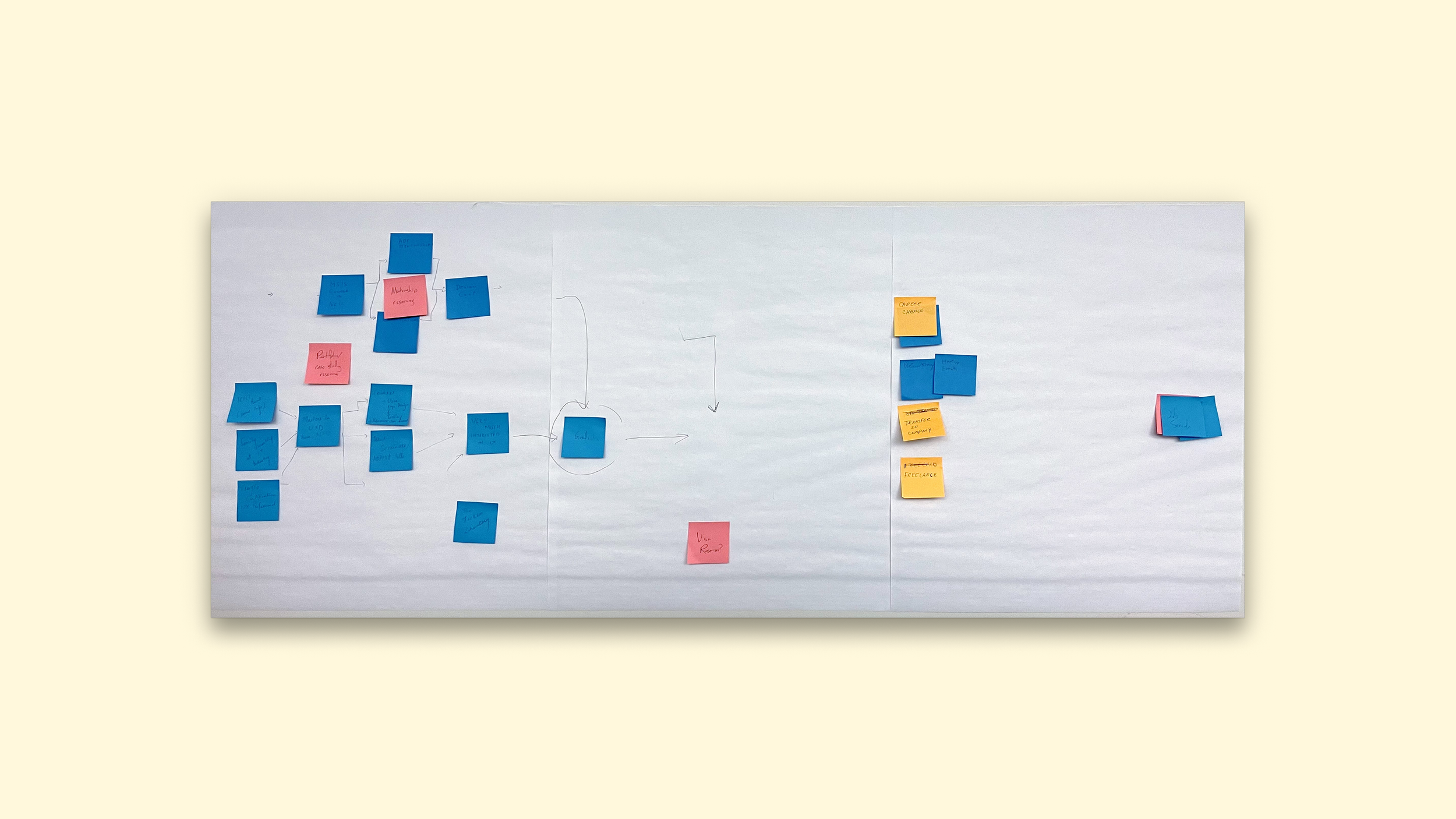
  • We created affinity diagrams and journey maps.

4

  • The pain points surfaced very quickly.

  • Students were scared that AI would make their skills obsolete before they even got started.

  • Student know that getting 3 years of experience as a designer is hard.

  • Finding internships already felt impossible. Students were asking how do they find opportunities? How do they find out about events?

5

  • "UX Need Talent. Lack of UX Awareness. UI ≠ UX. Every person's UX journey is different."

  • All of these statements are true and contextual. It can be hard as a new designer to articulate why doing UX is important.

  • We looked at other group's journey maps to get a sense if there were common themes from their work.
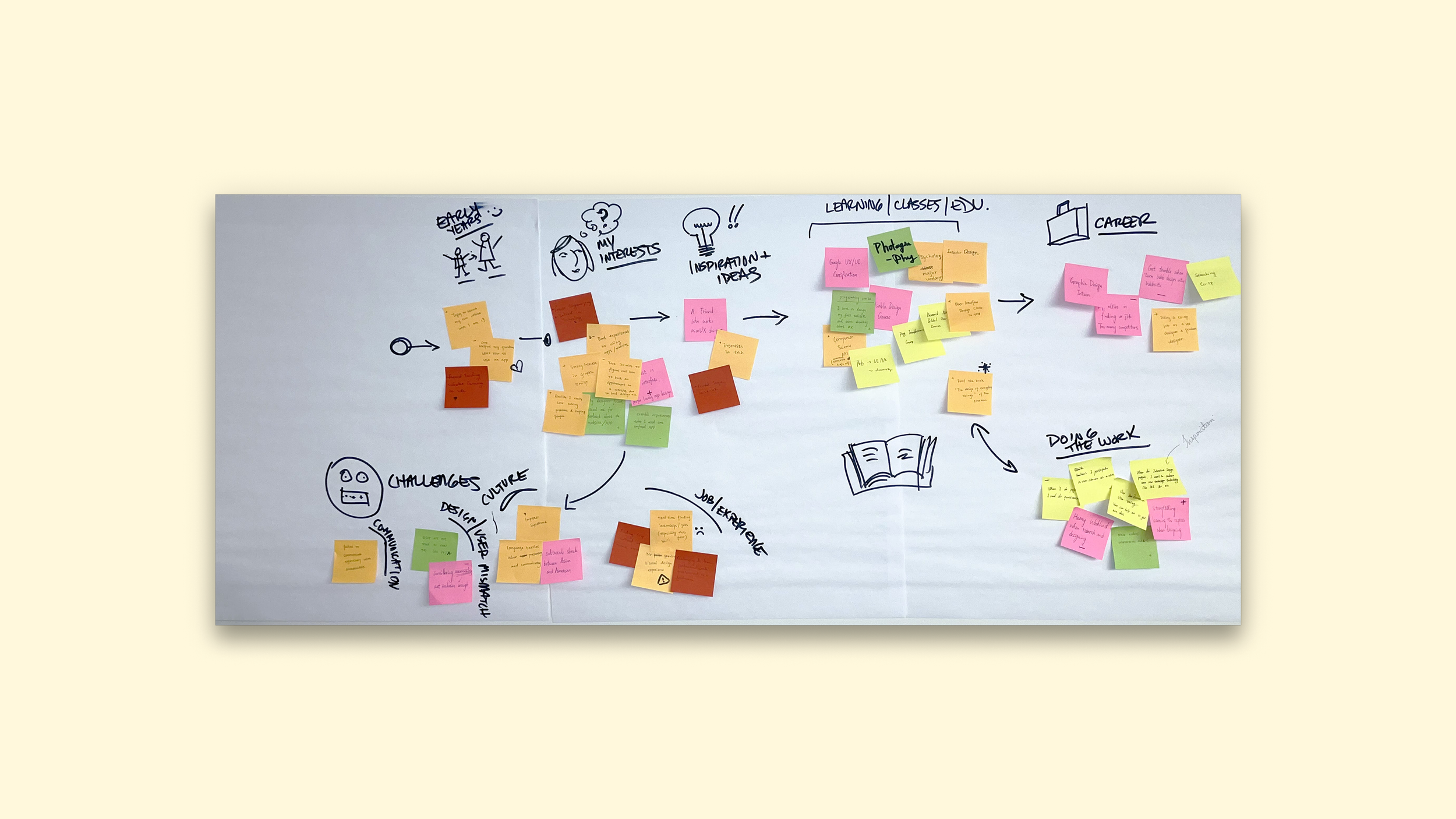
  • We wanted to see how it related to our maps and diagrams.

 
Customer Journey map for the Design Workshop

JOURNEY MAP FROM DESIGN WORKSHOP


Create


6

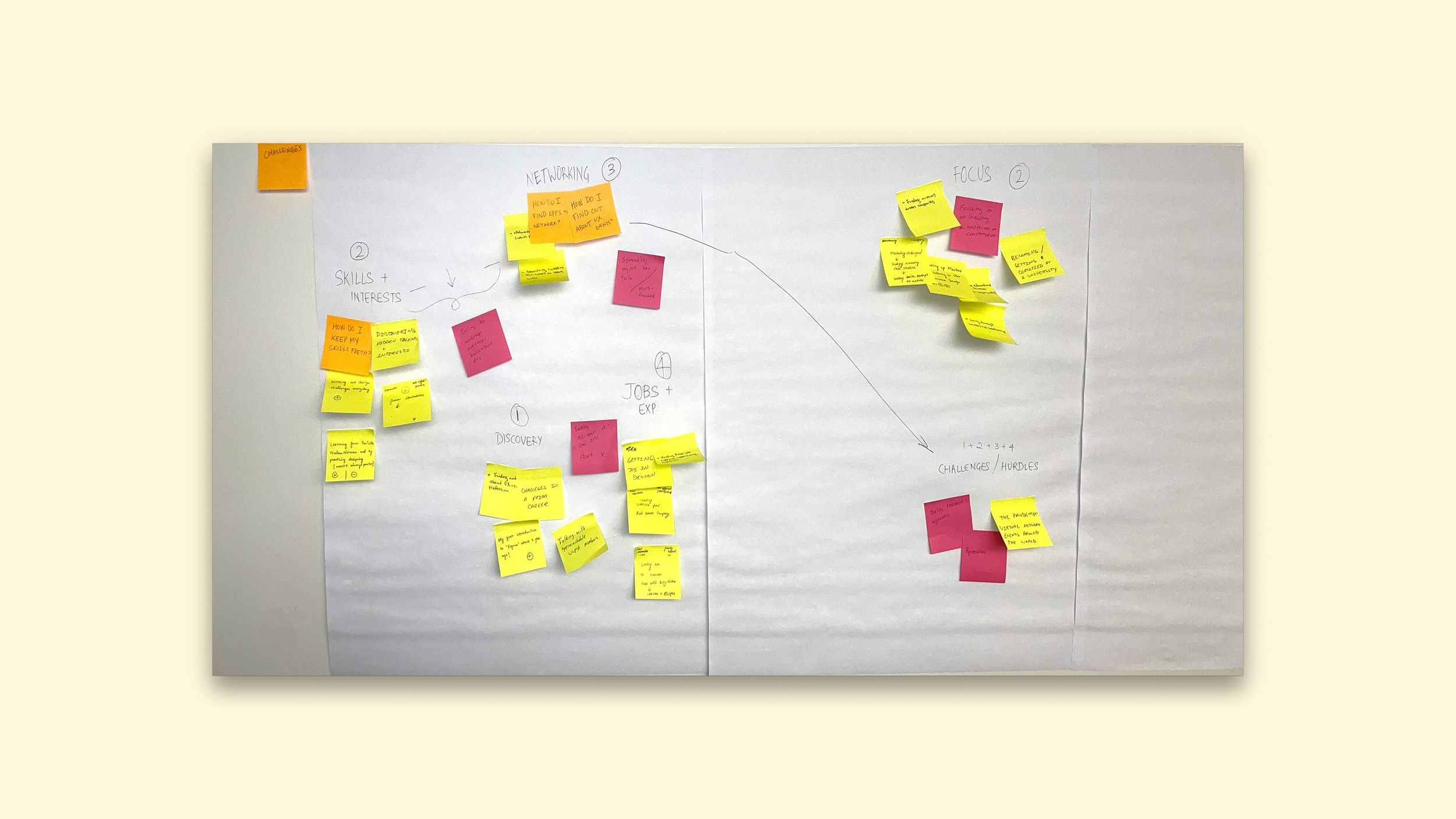
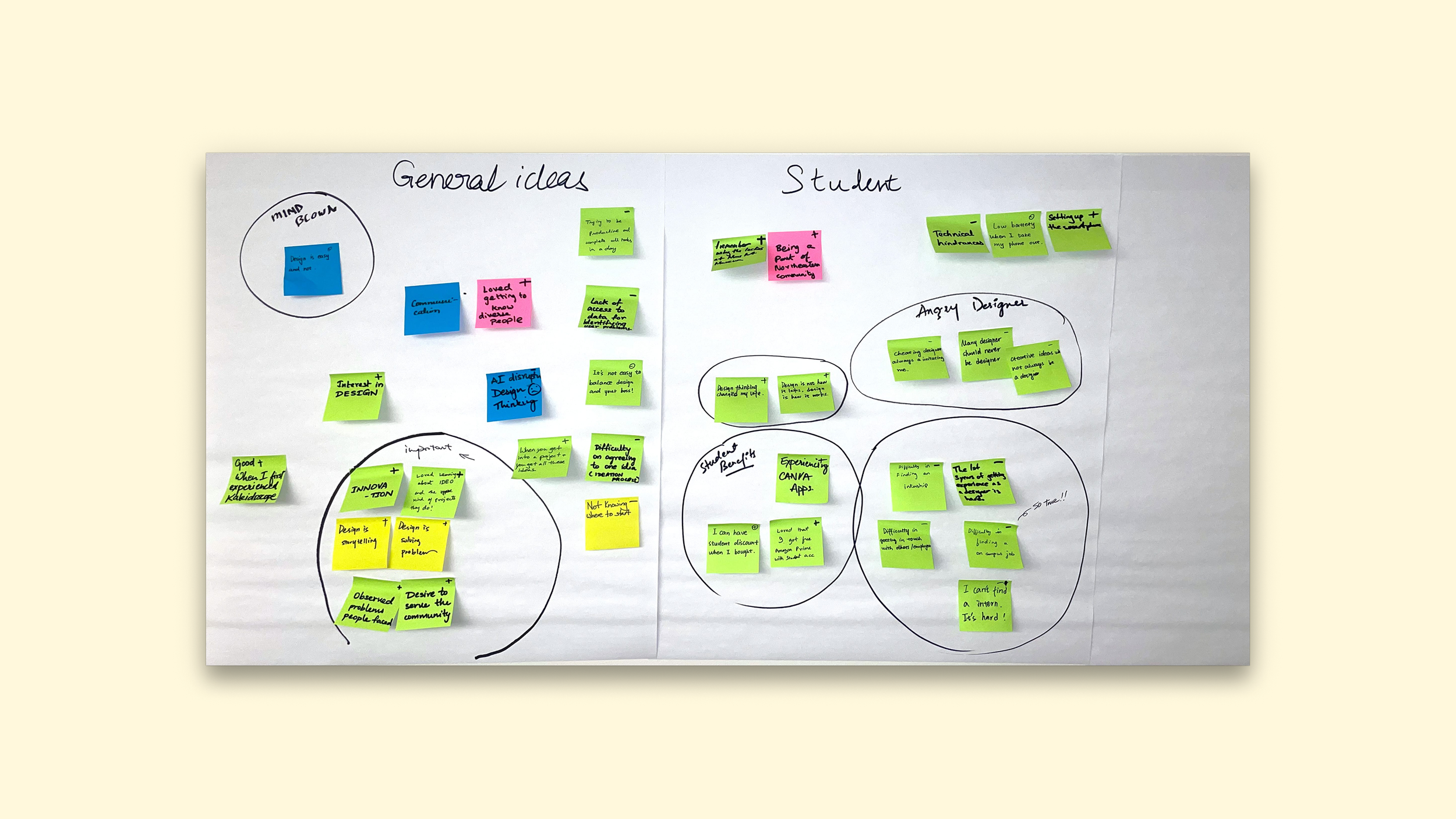
  • Each group built affinity diagrams and journey maps.

  • We plotted out experiences, needs, emotions, and pain points and sorted out everything into pros and cons.

  • You could see the same fears were showing up in every group.

  • It didn’t matter that there were 5 different groups because every journey map ended up at the same topics; discovery, skills, networking, jobs, focus, challenges, etc.

7

  • It didn’t matter that there were 5 different groups because every journey map ended up at the same topics; discovery, skills, networking, jobs, focus, challenges, etc.

  • We did a gallery viewing afterwards.

  • Each group( including mine) looked around at the other groups' work to see if we could relate to any experiences.

  • People followed the exercises and stayed engaged throughout.

8

  • After the gallery viewing, the ideation phase came next. We had the students do another exercise.

  • We had everyone take a sheet of paper and fold it into sixths.

  • We gave them 10 minutes to sketch out as many ideas as possible.

  • After time was up everyone shared their ideas.

  • We had the students voting on the best ones they liked.

  • The energy in the room was good.

 
Customer Journey map for the Design Workshop

JOURNEY MAP FROM DESIGN WORKSHOP


Customer Journey map for the Design Workshop

JOURNEY MAP FROM DESIGN WORKSHOP


Customer Journey map for the Design Workshop

JOURNEY MAP FROM DESIGN WORKSHOP


Test


9

  • The goal of this workshop was never to walk out with a finished product.

  • It was to walk out with real insights from real people and that's what happened.

  • The affinity diagrams surfaced common themes across every group.

10

  • The gallery walk validated that students across the room were feeling the same things.

  • The biggest takeaway for me wasn't about the students; it was about facilitation.

  • I went in terrified and got through it by coming out of my shell and doing something out of my element.

11

  • I improvised and I think I did it well. The other facilitators said that too.

  • If I could do it again, I'd try to remember more of the specific ideas people voted on.

  • But for a first time facilitating a room full of strangers who had a lot to say; I'll take it.


Nikkia Prim