Raspberry Beret: Designing the Boutique and Digital Experience Through User Research

The Raspberry Beret Prototype


Role

UX Researcher


Project Type

UX research


Duration

8 weeks


Deliverables

Logo, Mockups, customer journey map, sitemap, wordmap, prototype


The Challenge


The Problem

  • Raspberry Beret is a funky consignment boutique selling luxury vintage clothing and accessories.

  • They have strong competitive advantages with their two stores in Massachusetts.

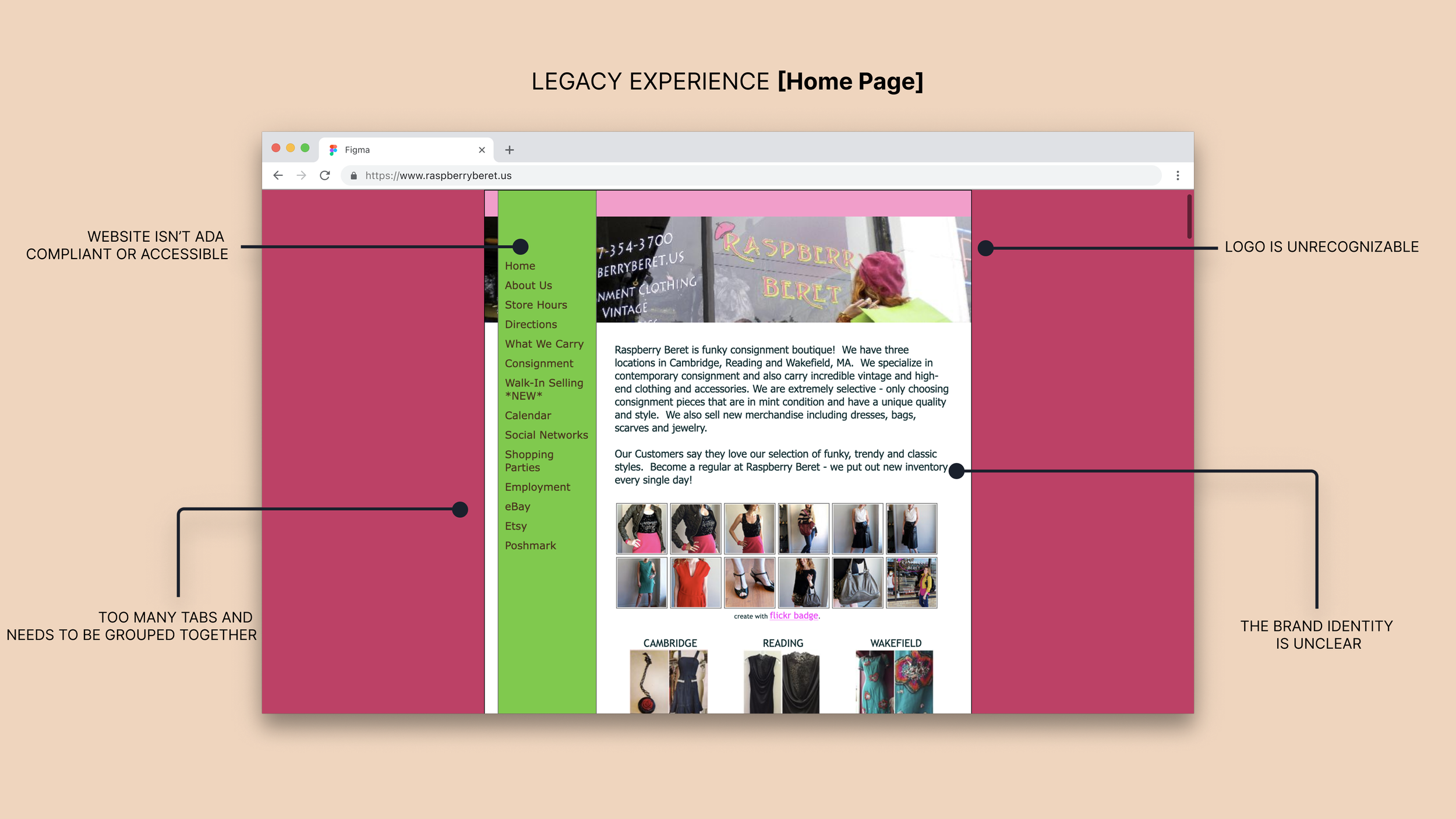
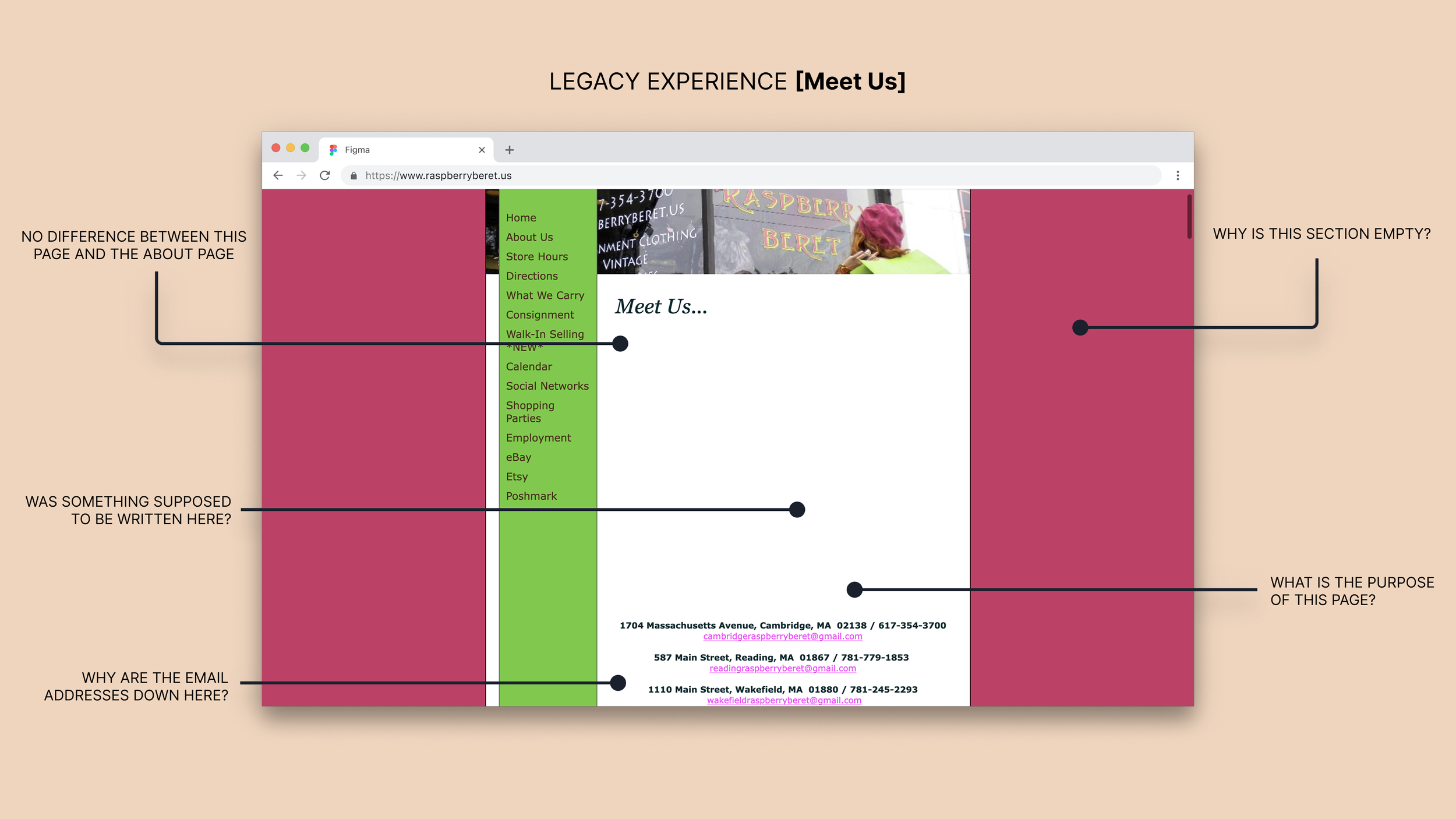
  • The brand has lots of personality in real life but, none of that was showing up on their website. It just didn’t exist.

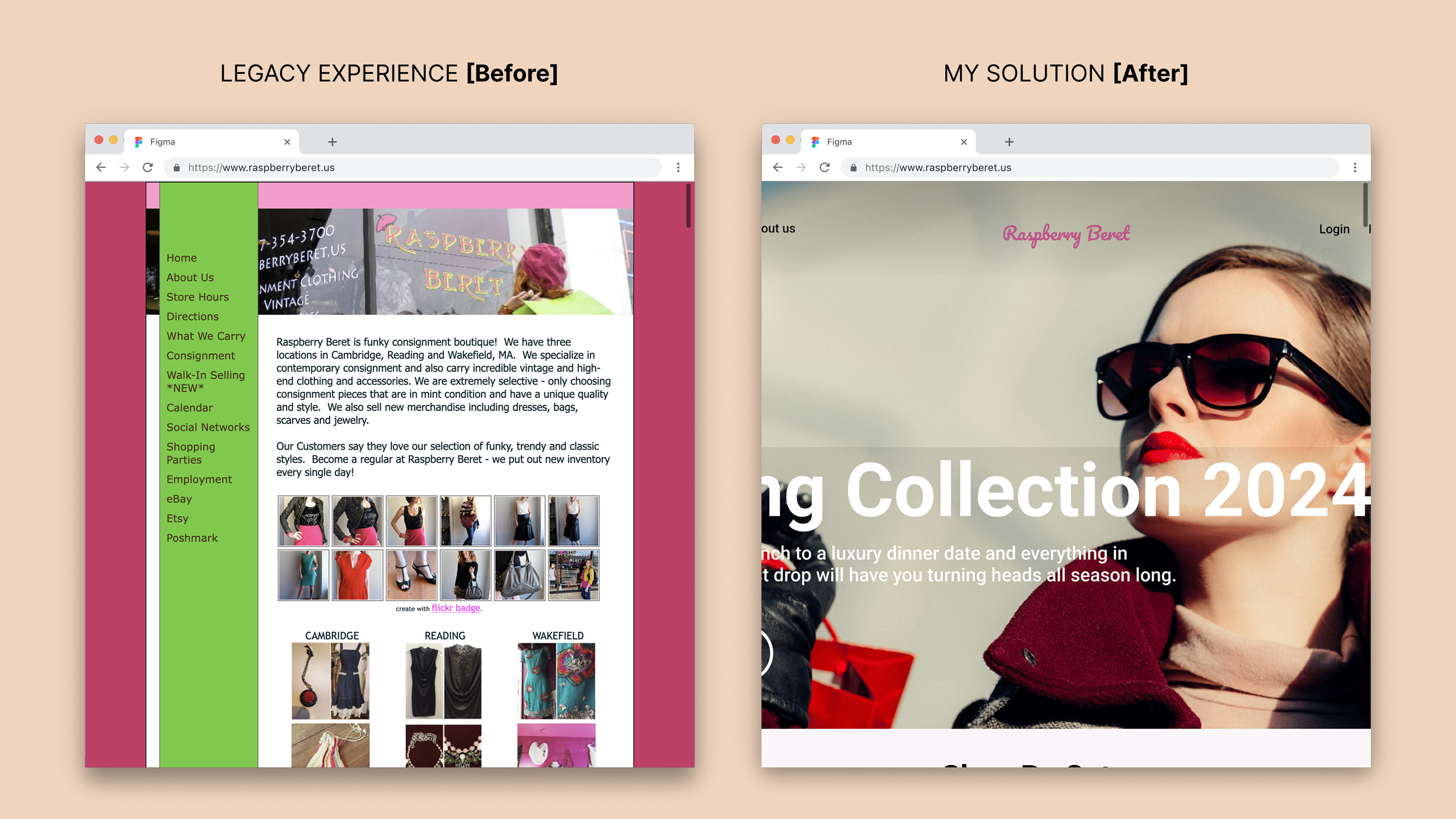
  • It was too busy; a neon green sidebar on a magenta background with red text is nearly impossible to read.

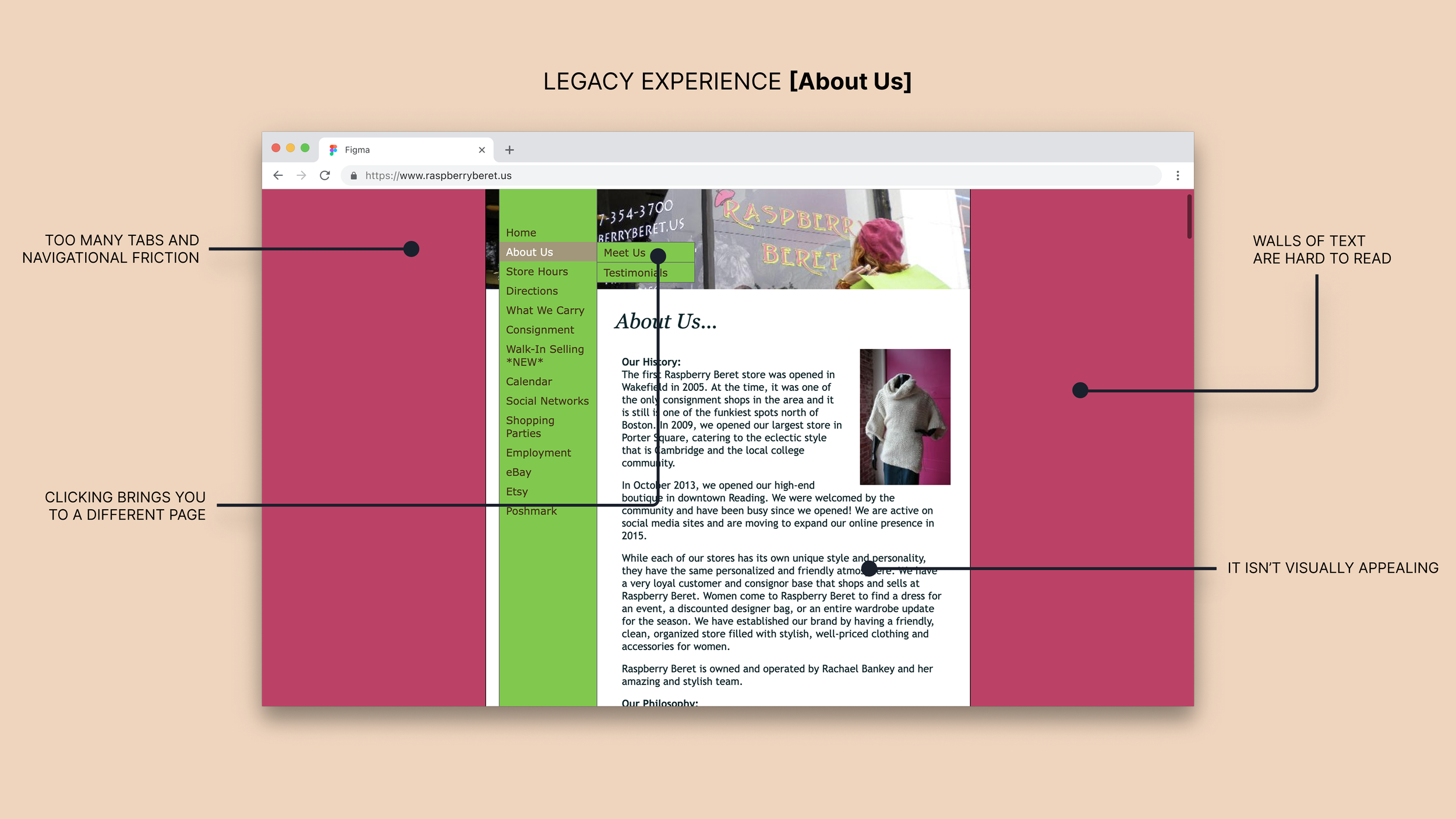
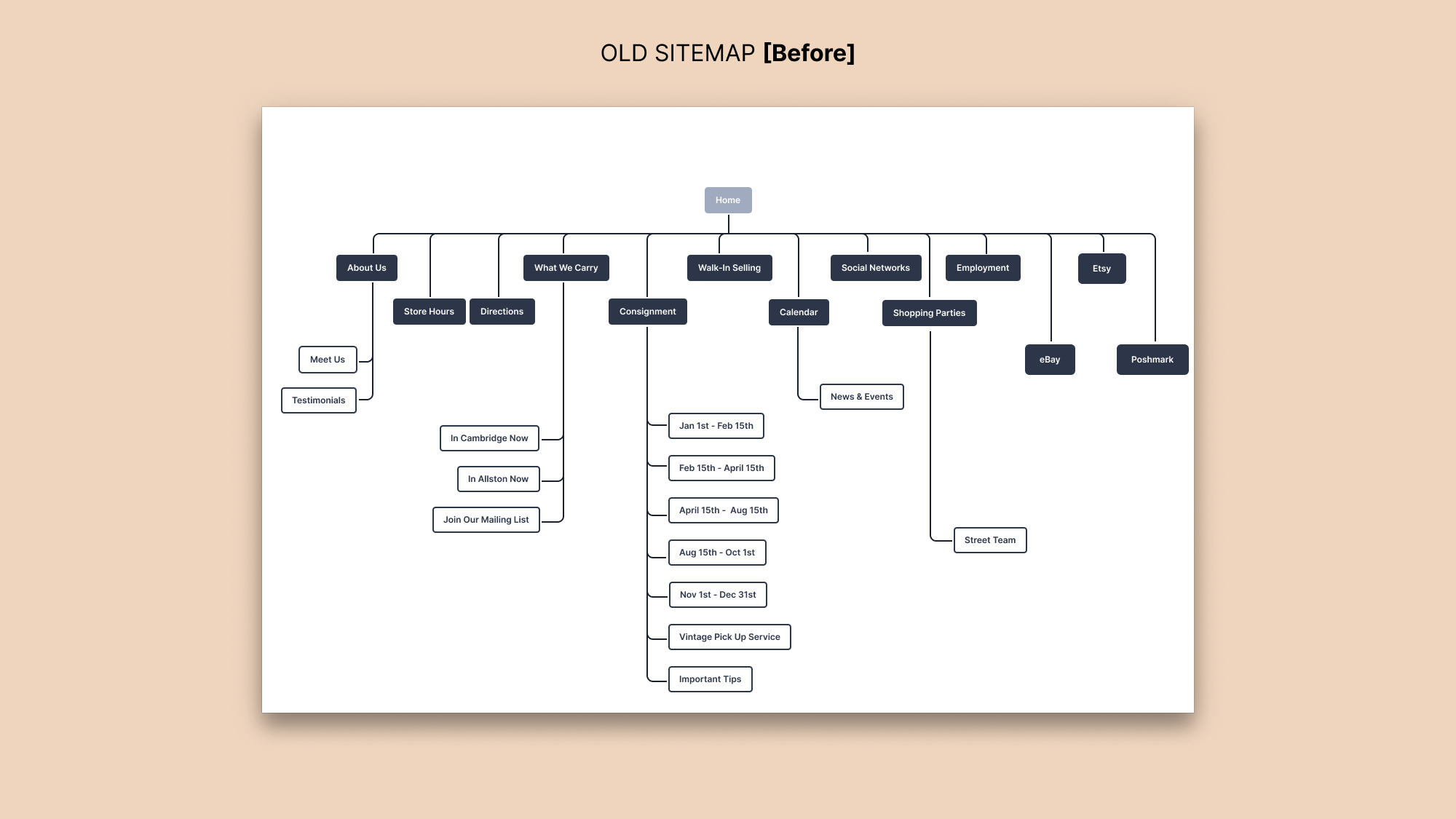
  • The navigation had too many tabs and shop pages for their online stores. It was redundant and frustrating.

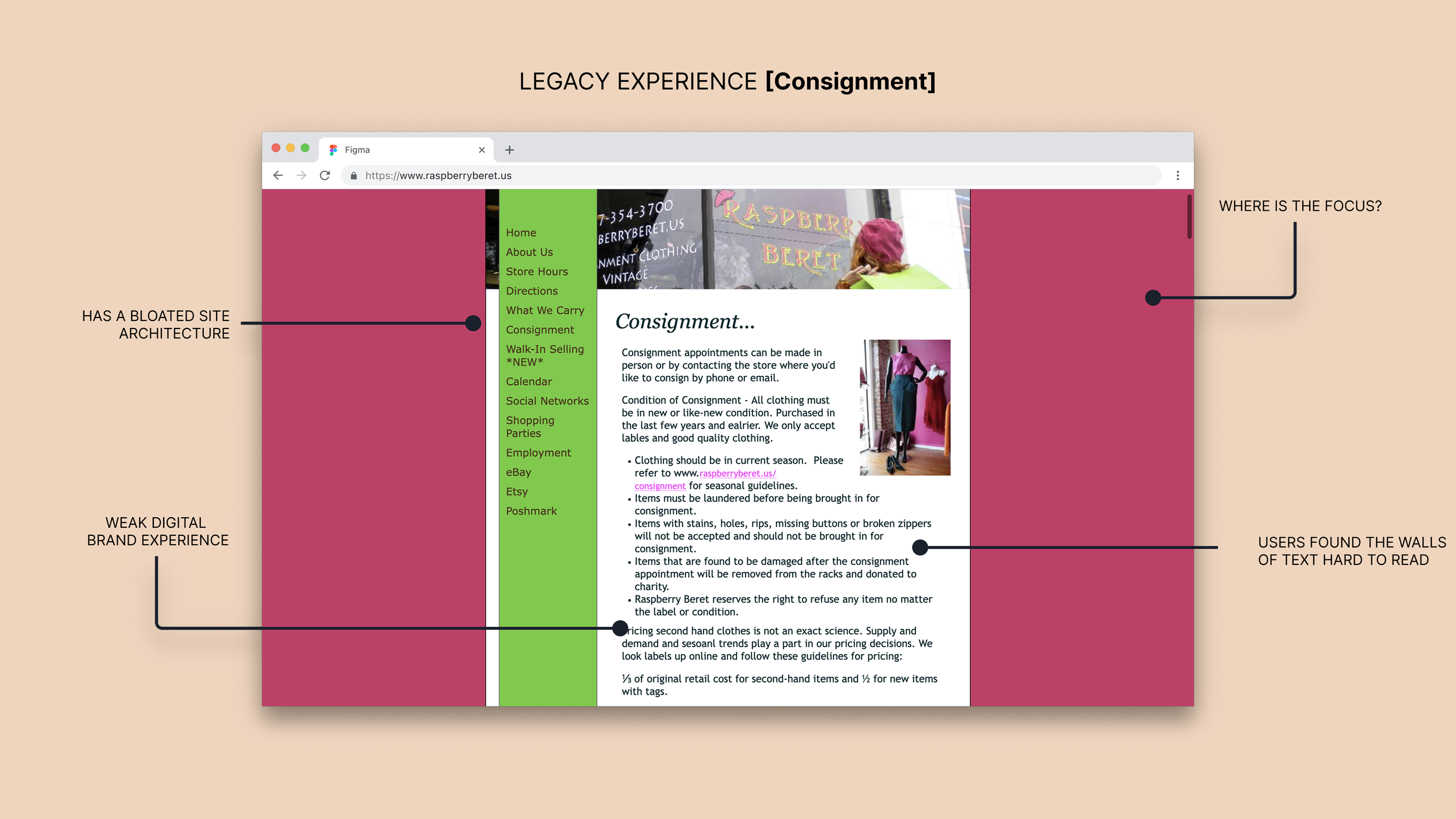
  • Everything was competing for attention and it was simply just too much.


Objective

  • First objective was to build them a design system along with a brand identity.

  • Raspberry Beret's in-store experience was great but, their online experience was not.

  • Clean it up, cut the tabs and make it easier to shop without getting lost.

  • There’s loud colors, walls of text, and a navigation with a gazillion pages.

  • College students shop online and on their phones. If your website is confusing or looks chopped, they're not coming to your store either.

  • A better online experience isn't just a design problem; It’s also a business problem.


Goals

  • The vibrant colors and funky personality worked for the in-store experience.

  • However, it didn’t translate well for the online experience. That same energy online reads as chaotic.

  • The goal was to fix that problem; To build what made the store special into a digital experience that made sense.

  • Cleaning up the navigation and making it easier to shop without getting lost.

  • If your customer can’t find what they’re looking for, they’re leaving and not coming back.

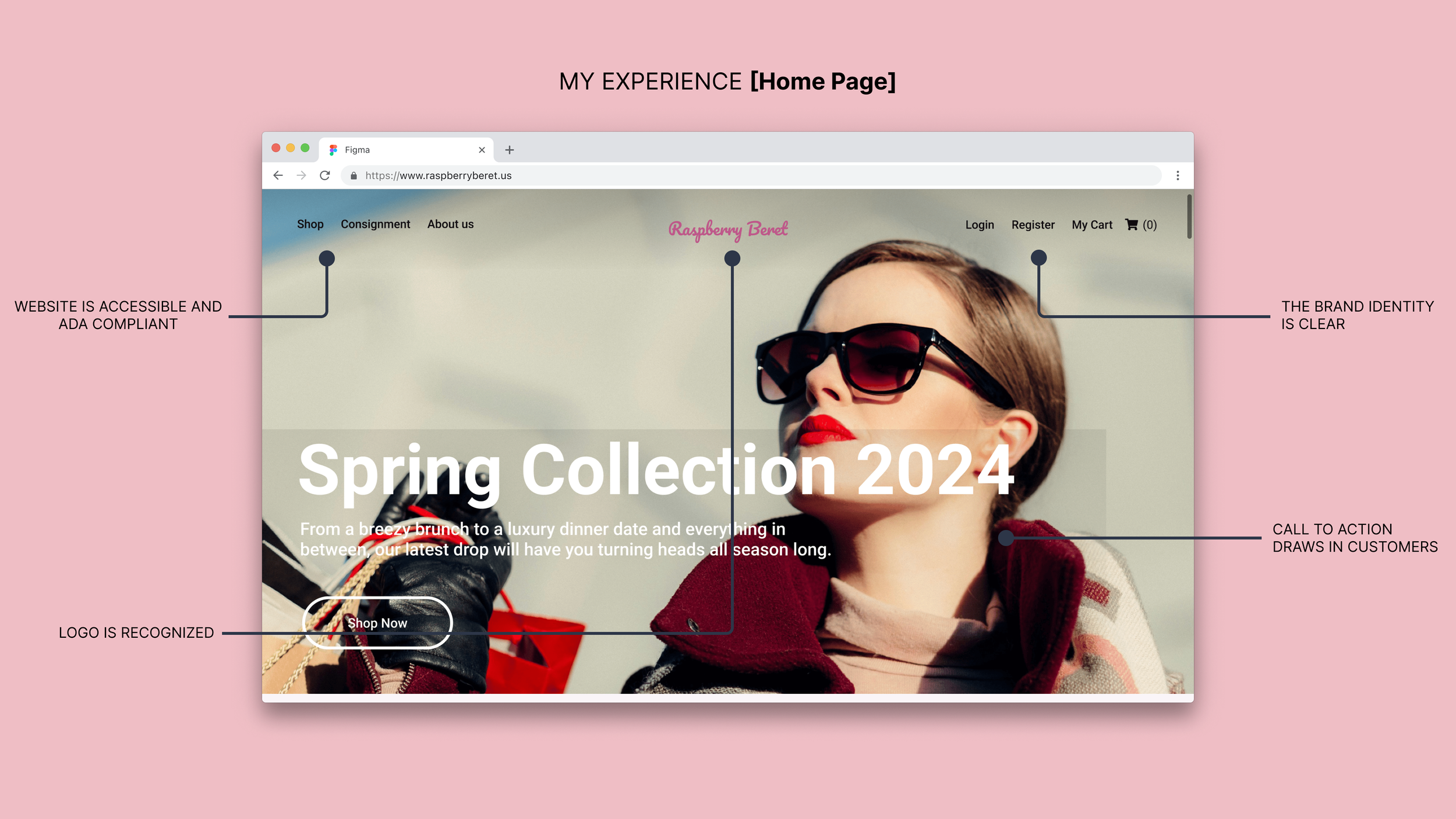
  • Making the website ADA compliant by following the recommendations of WCAG 2.1 compliance rules.


Here is Raspberry Beret’s mission statement from their website (“We believe that there is a social responsibility that comes with buying “recycled” clothing. It’s an easy, economical, and stylish way to help the environment. America throws away twenty billion pounds of used clothing each year. Mounds of wasted clothing, often still in great condition, fill our landfills. Shopping at stores like Raspberry Beret and reusing second hand clothing will significantly reduce the severe toll placed on the environment through the production of new clothing.“)


Define


Research


Create


Test


Define


1

  • Working in a team of 6, the goal was clear; give Raspberry Beret a brand identity and a website that actually worked.

  • Comparing the old experience with the new. Designing the brand and digital experience through user research.


2

  • The Cambridge and Allston stores serves two different audiences; female college students and elderly women.

  • The redesign had to work for these audiences and it had to made sense.

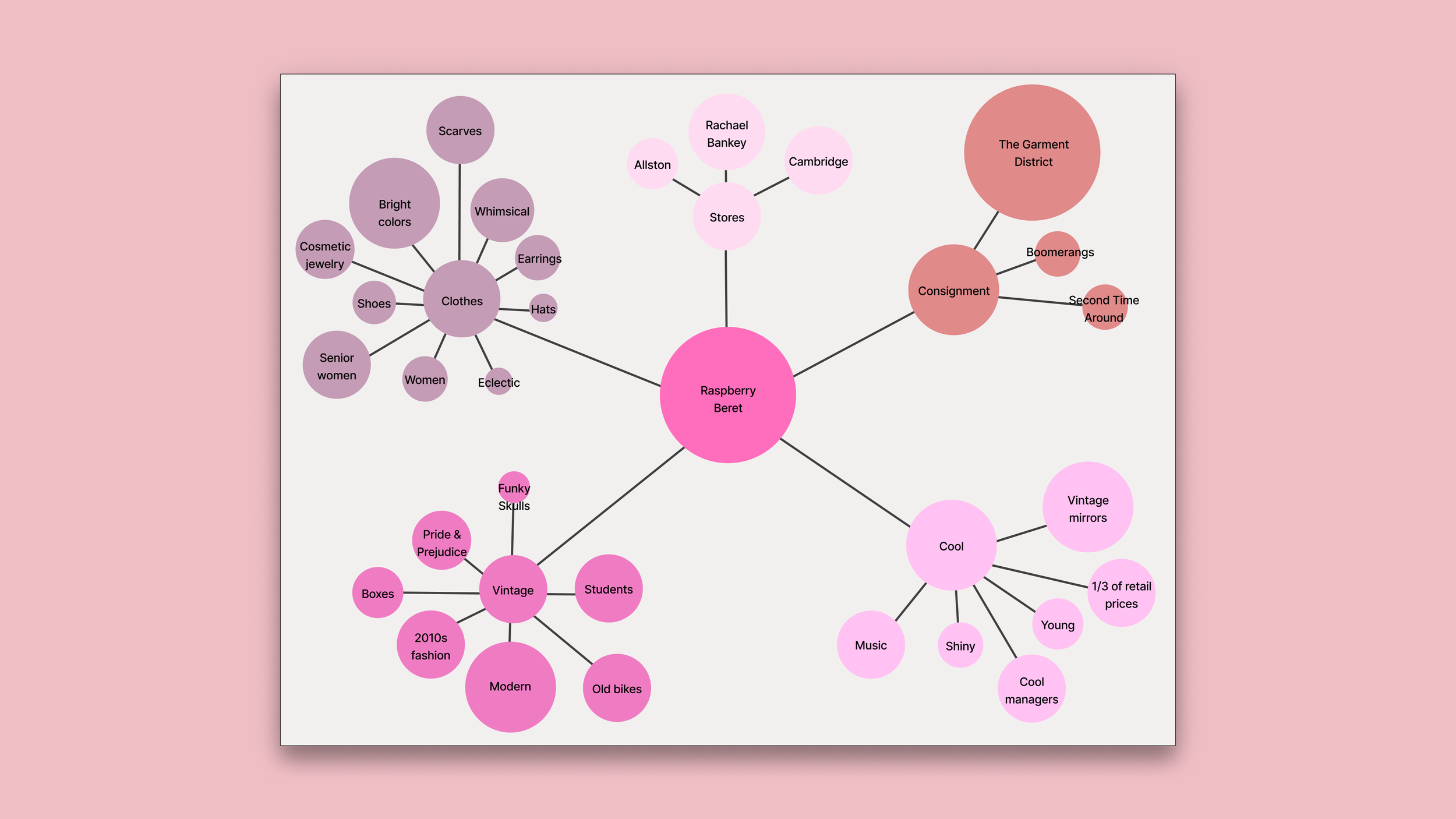
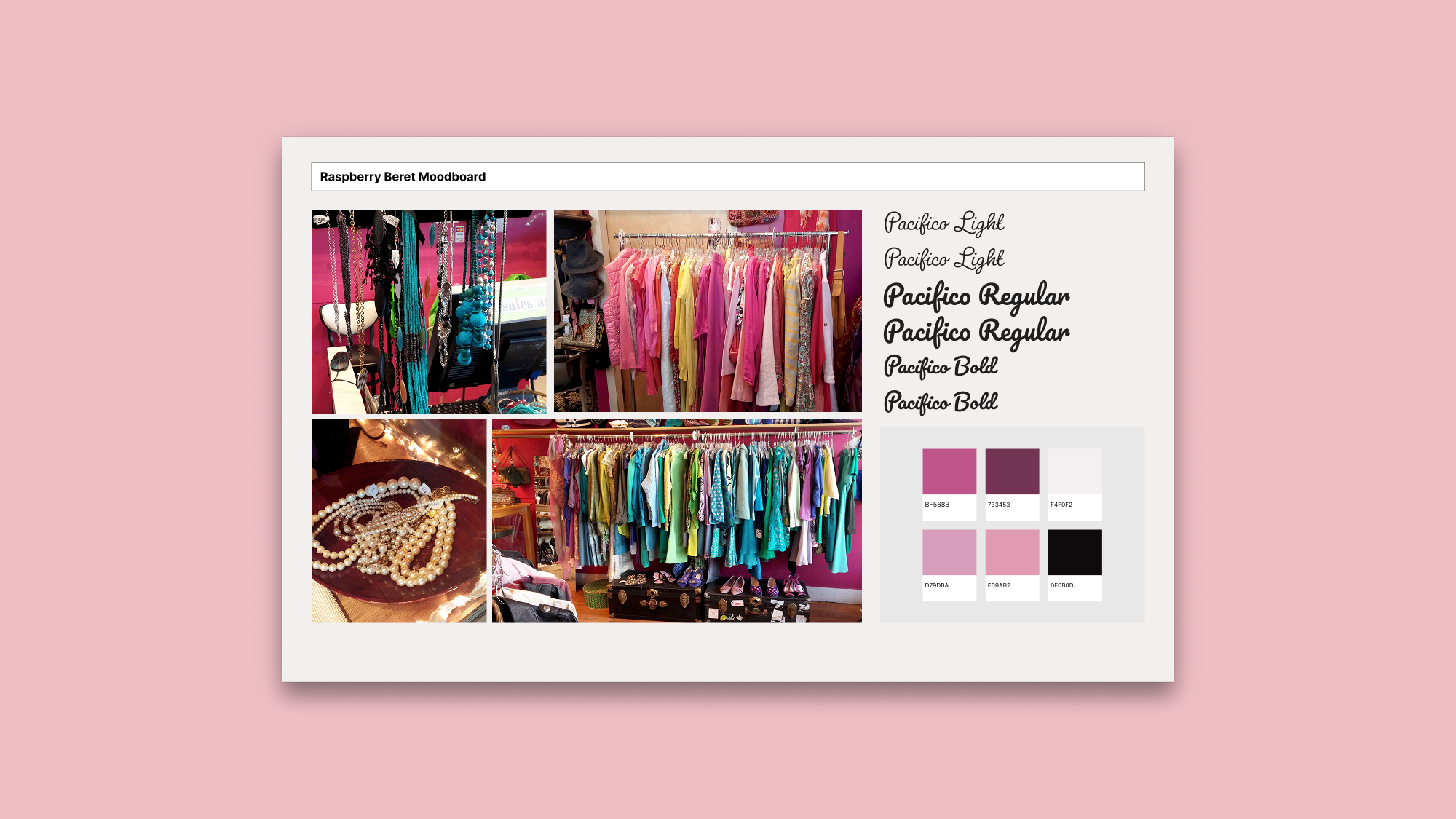
  • Deliverables included a wordmap, moodboard, customer journey map, site map, lo-fi wireframes and a Figma prototype.


Rough sketch of Cherry Blossoms and fireworks


Research


3

  • Using word association and spider mapping to explore the relationships between Japan, the USA, Washington D.C., and the cherry blossoms.

  • These four subjects share a connection with each other through their past and present.

  • The cherry blossom is the foundation that I build my system from; using pink as the main color.

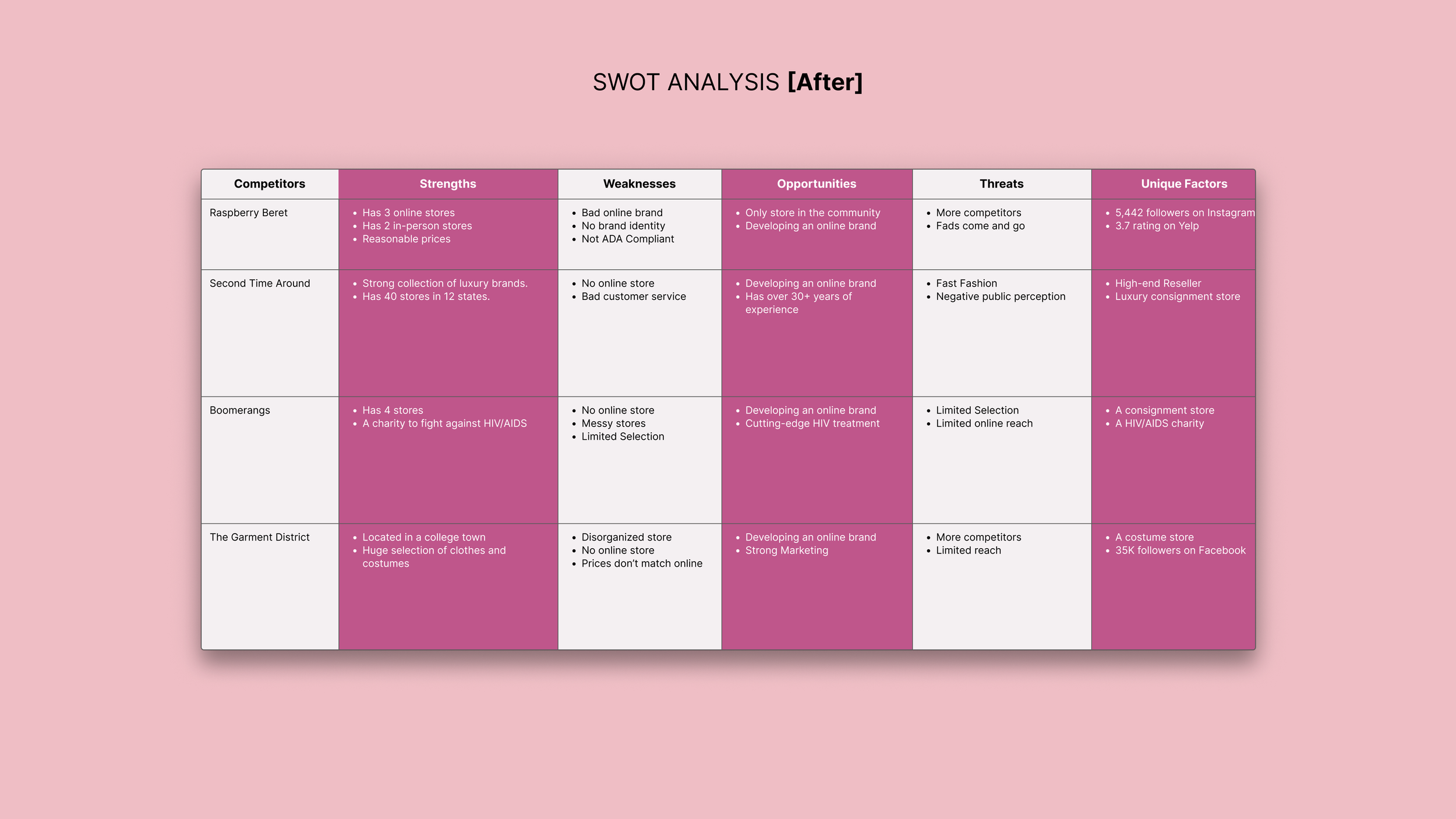
  • Started with field research and interviews to understand the brand and its users. Then audited the existing site and ran a SWOT analysis against three Boston area competitors — Second Time Around, Boomerangs, and the Garment District — looking at their mission statements, business models, unique factors, locations, and customer feedback.

  • Recruited 2 college students and 1 student advisor for usability testing. Each participant completed 3 scenarios — scheduling a shopping party, finding a dress, and contacting a store to sell their items. I watched how they used the site and let them show me where it broke down.

  • The navigation issues surfaced fast. Users were clicking through multiple tabs just to reach one destination. One user kept trying to click product photos expecting them to be links — and got annoyed when they weren't. That moment stuck with me and directly shaped the final design.

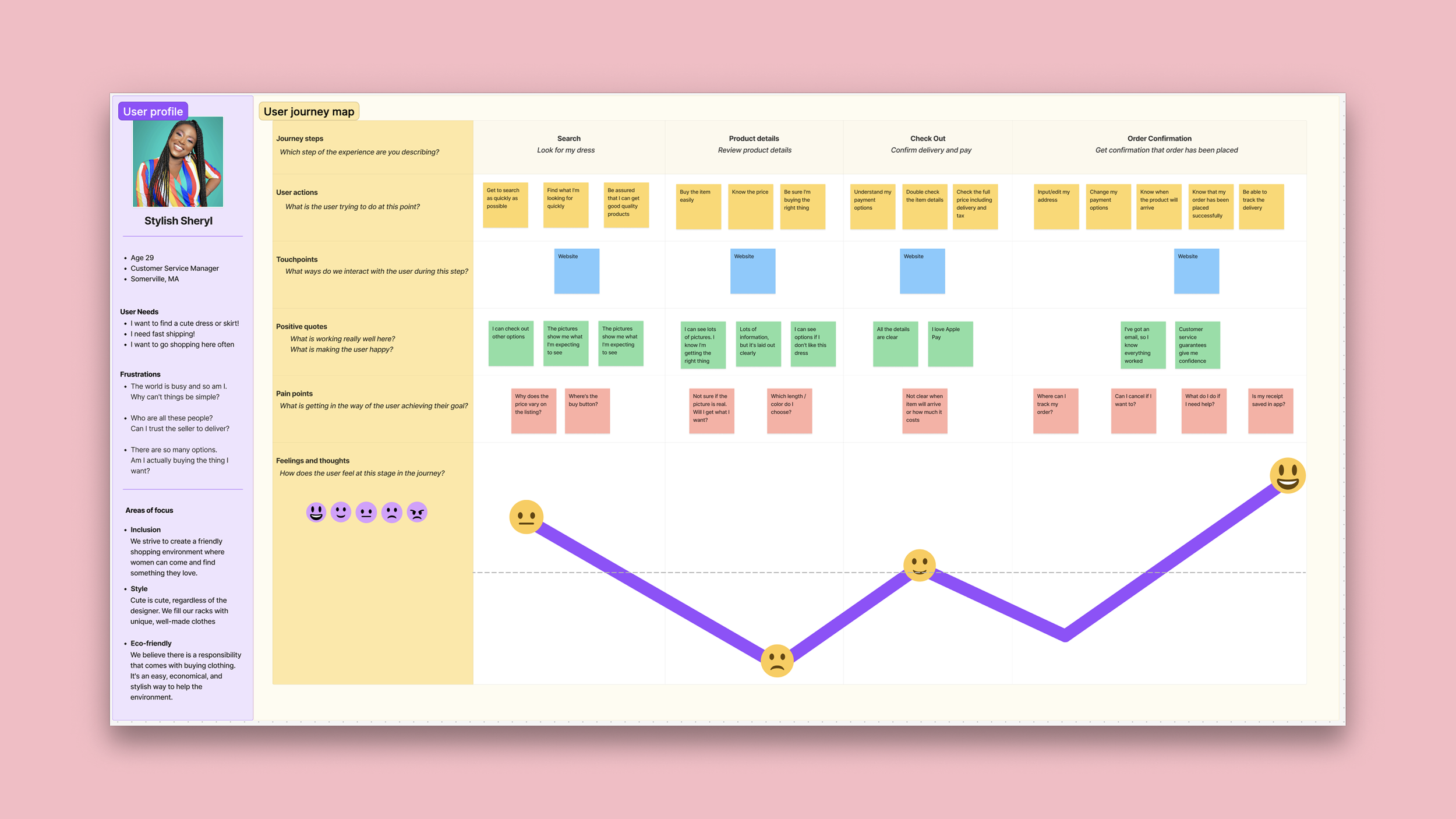
  • Built 2 user personas from the research data and mapped their journeys to pinpoint exactly where the experience fell apart.


4

  • Using word association and spider mapping to explore the relationships between Japan, the USA, Washington D.C., and the cherry blossoms.

  • These four subjects share a connection with each other through their past and present.

  • The cherry blossom is the foundation that I build my system from; using pink as the main color.

  • Started with field research and interviews to understand the brand and its users. Then audited the existing site and ran a SWOT analysis against three Boston area competitors — Second Time Around, Boomerangs, and the Garment District — looking at their mission statements, business models, unique factors, locations, and customer feedback.

  • Recruited 2 college students and 1 student advisor for usability testing. Each participant completed 3 scenarios — scheduling a shopping party, finding a dress, and contacting a store to sell their items. I watched how they used the site and let them show me where it broke down.

  • The navigation issues surfaced fast. Users were clicking through multiple tabs just to reach one destination. One user kept trying to click product photos expecting them to be links — and got annoyed when they weren't. That moment stuck with me and directly shaped the final design.

  • Built 2 user personas from the research data and mapped their journeys to pinpoint exactly where the experience fell apart.


5

  • My design decision uses a bold, colorful palette using sans serif and script typefaces. San-serif show a contemporary feel while the script typeface adds a touch of antiquity.

  • Dug into the history of the festival to understand what it actually represents. A celebration of Japanese-American cultural exchange rooted in Washington DC.


3

  • Using word association and spider mapping to explore the relationships between Japan, the USA, Washington D.C., and the cherry blossoms.

  • These four subjects share a connection with each other through their past and present.

  • The cherry blossom is the foundation that I build my system from; using pink as the main color.

  • Started with field research and interviews to understand the brand and its users. Then audited the existing site and ran a SWOT analysis against three Boston area competitors — Second Time Around, Boomerangs, and the Garment District — looking at their mission statements, business models, unique factors, locations, and customer feedback.

  • Recruited 2 college students and 1 student advisor for usability testing. Each participant completed 3 scenarios — scheduling a shopping party, finding a dress, and contacting a store to sell their items. I watched how they used the site and let them show me where it broke down.

  • The navigation issues surfaced fast. Users were clicking through multiple tabs just to reach one destination. One user kept trying to click product photos expecting them to be links — and got annoyed when they weren't. That moment stuck with me and directly shaped the final design.

  • Built 2 user personas from the research data and mapped their journeys to pinpoint exactly where the experience fell apart.


Create


5

  • It wasn't just about making things look pretty; it was using my research to communicate with clarity and cultural respect.

  • The festival carries huge cultural and political implications between Japan and the United States.

  • So, the design must celebrate that relationship
    with careful consideration.

  • It wasn’t just about making things look pretty; it was using the research to communicate with clarity.

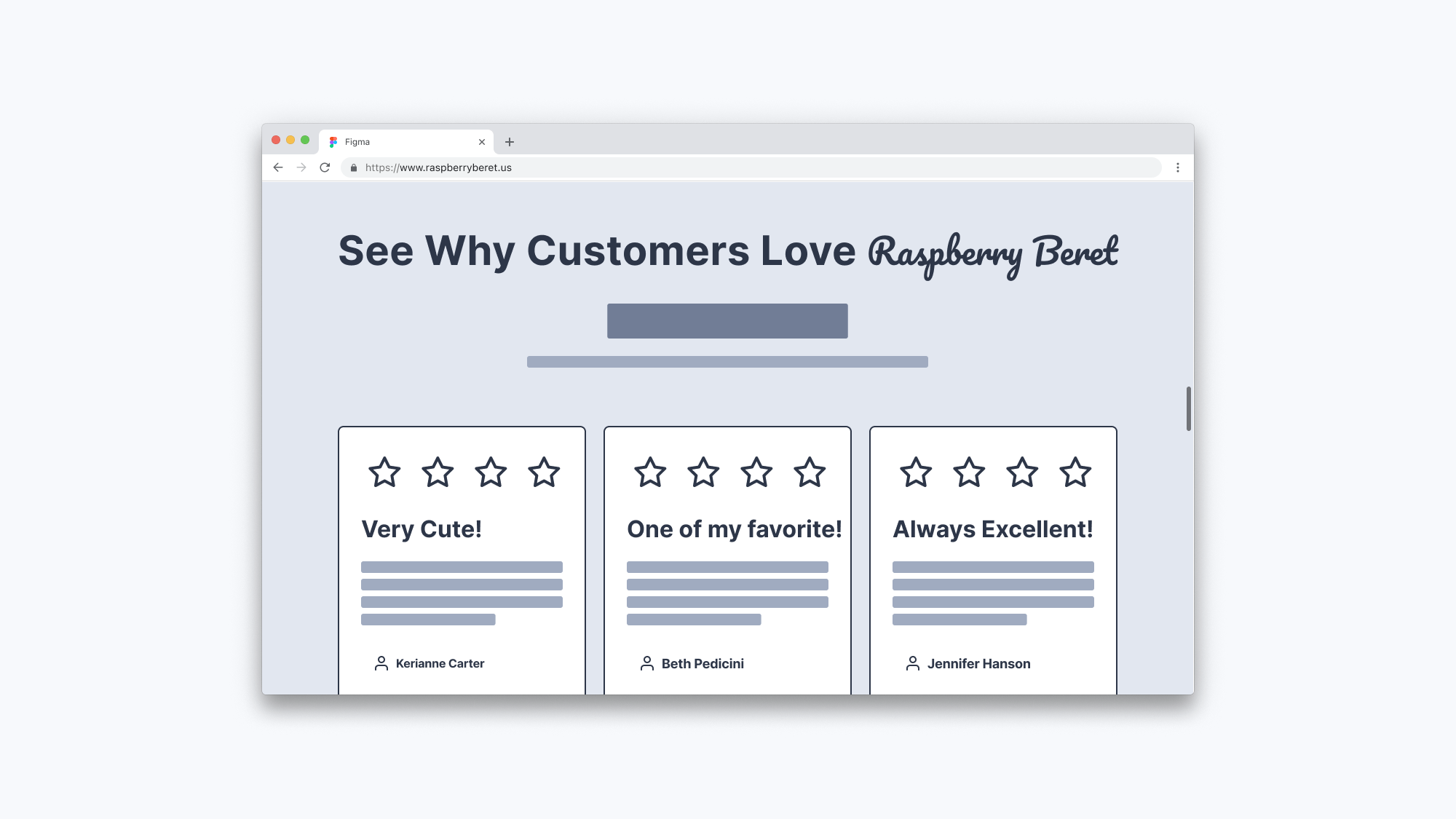
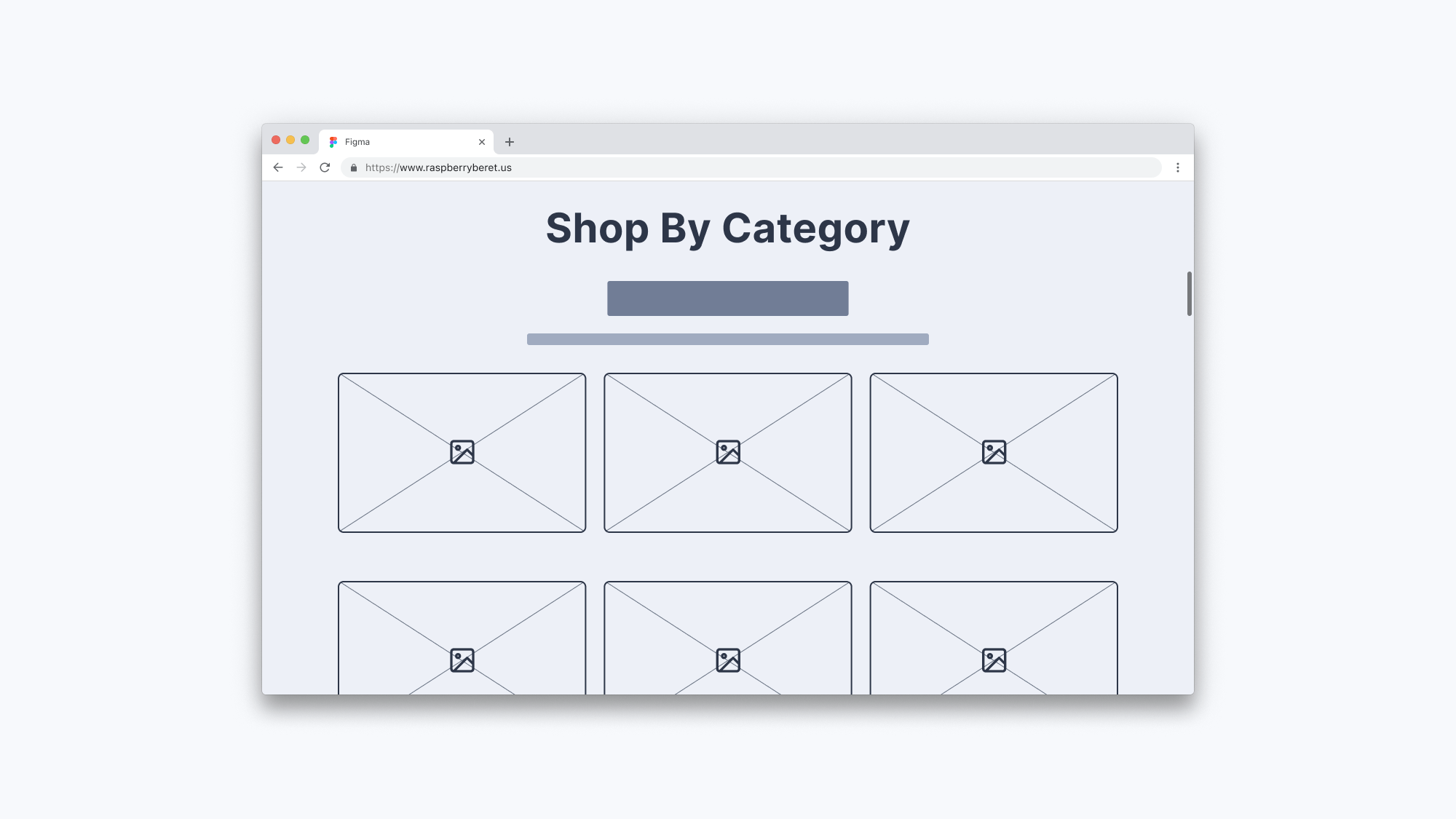
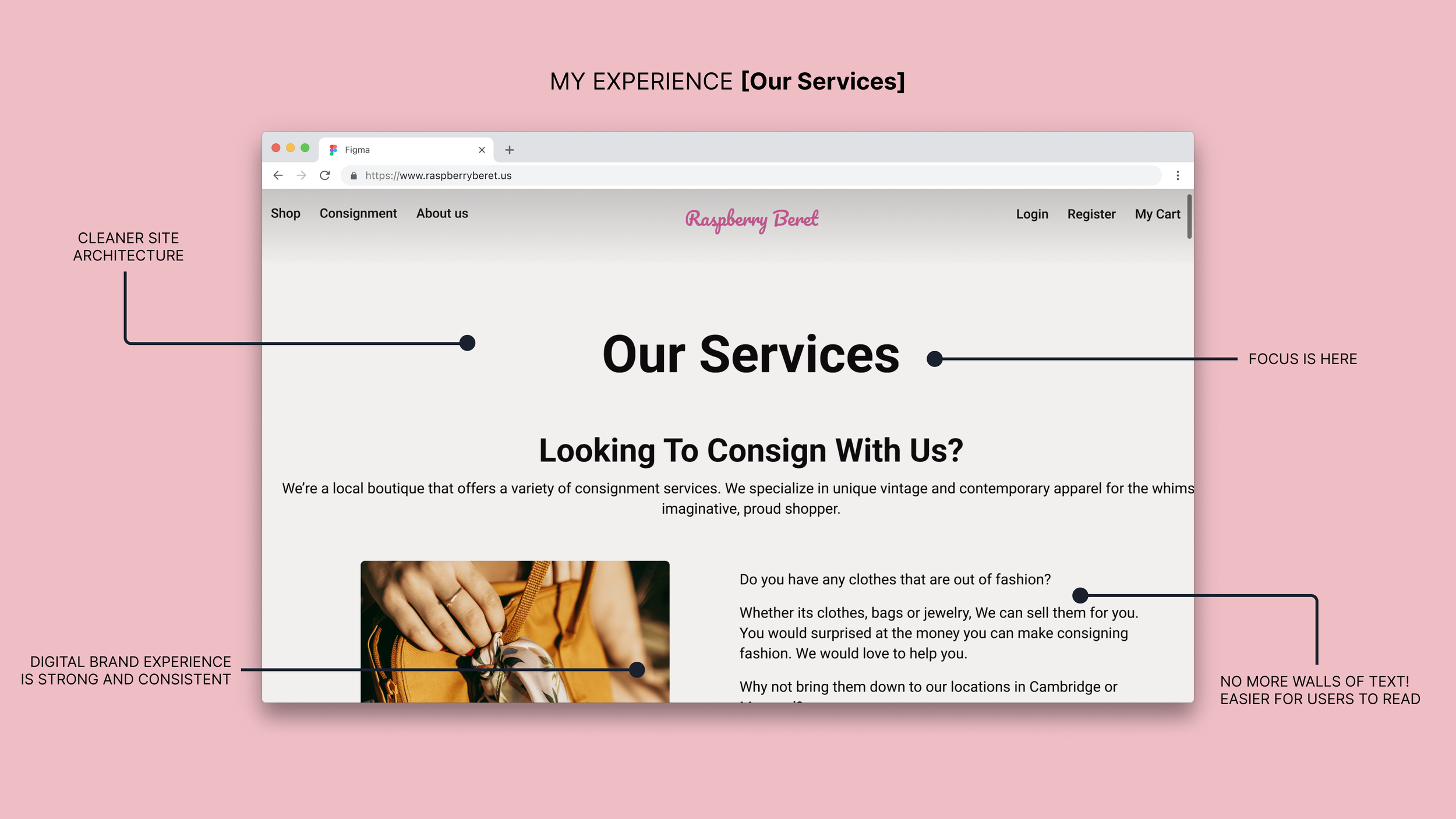
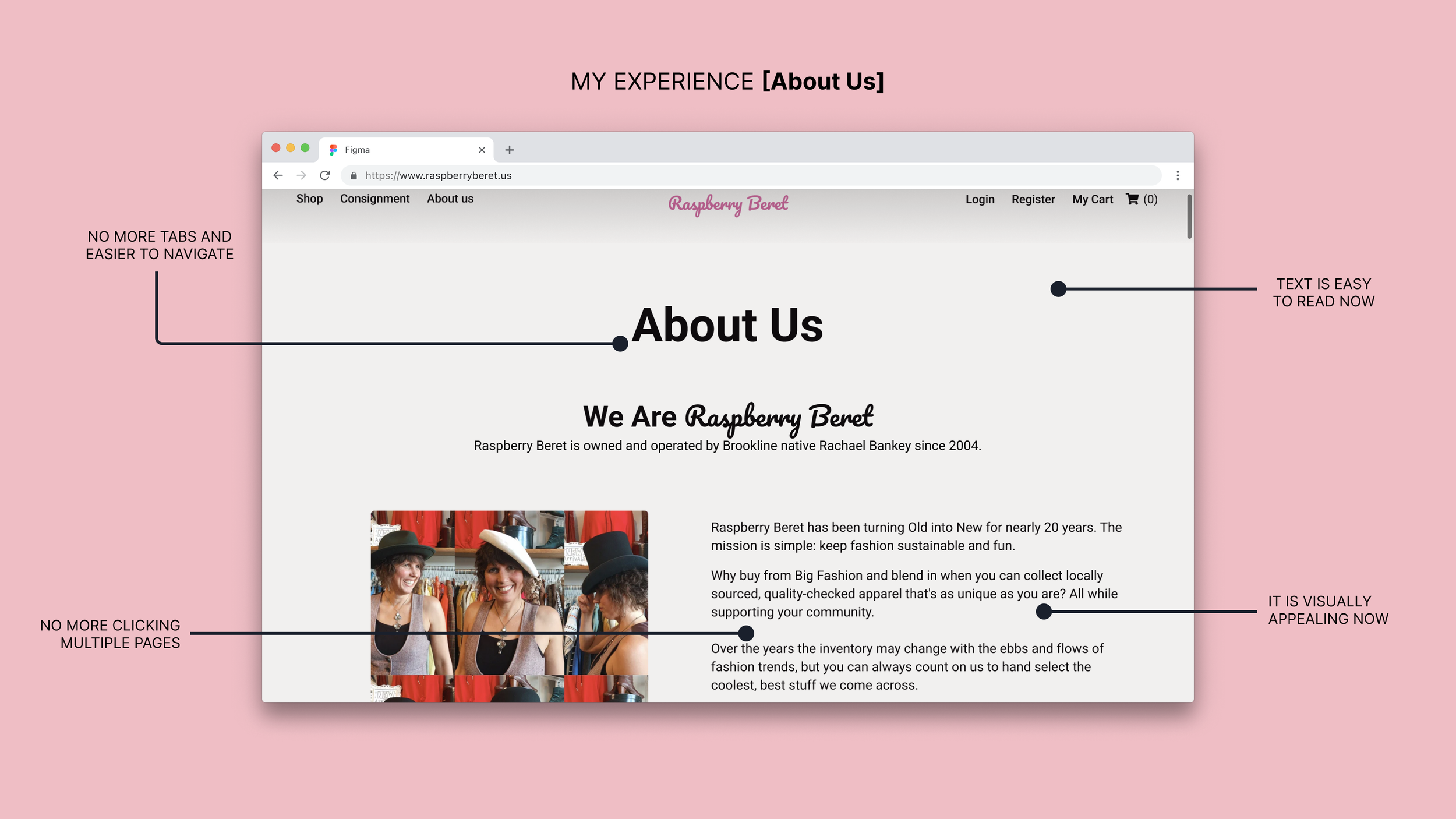
  • The biggest fix was consolidating three separate shop pages into one pictorial shop page. The redundancy was confusing users — combining them eliminated the friction and let the clothing speak for itself.

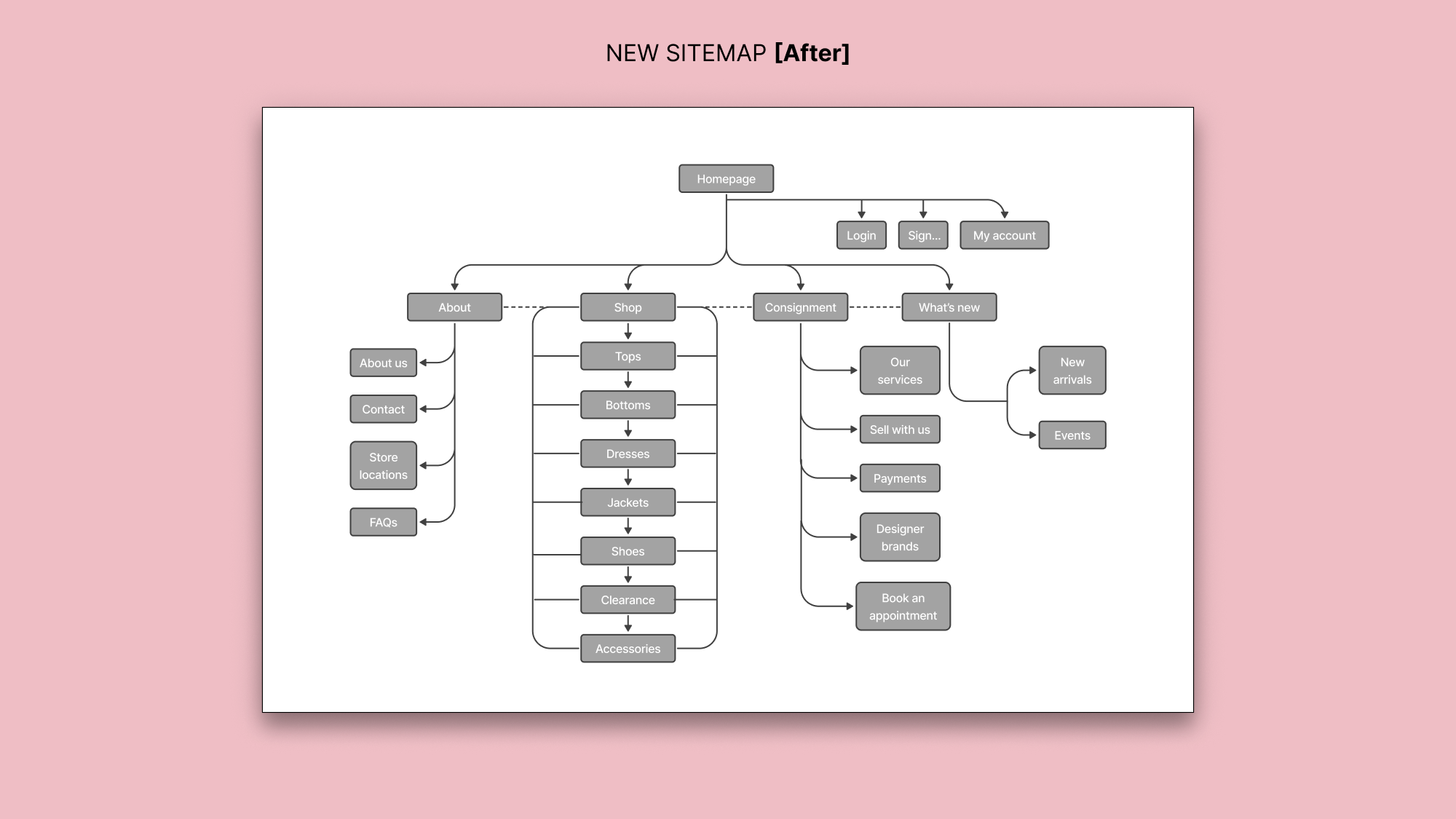
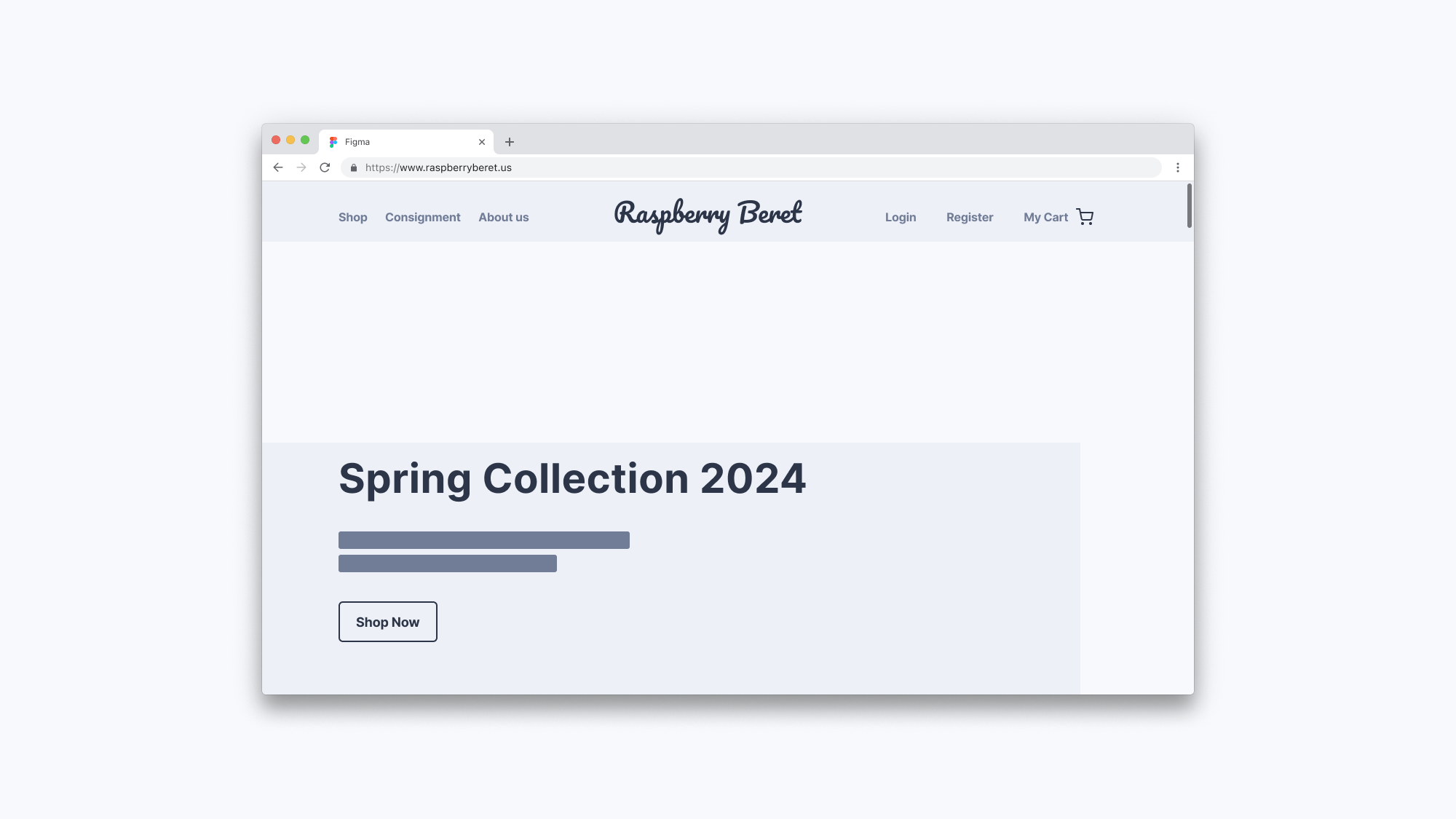
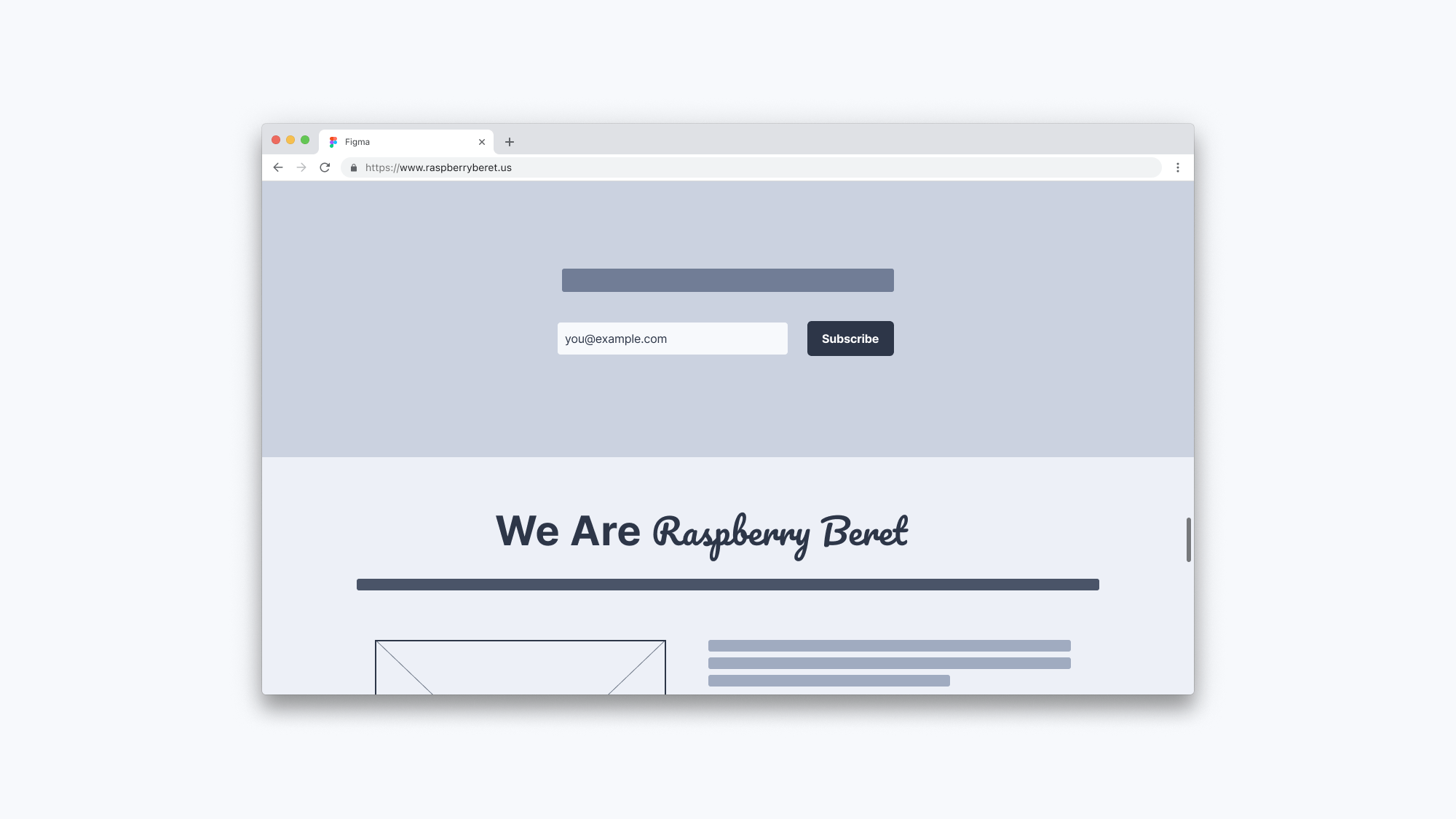
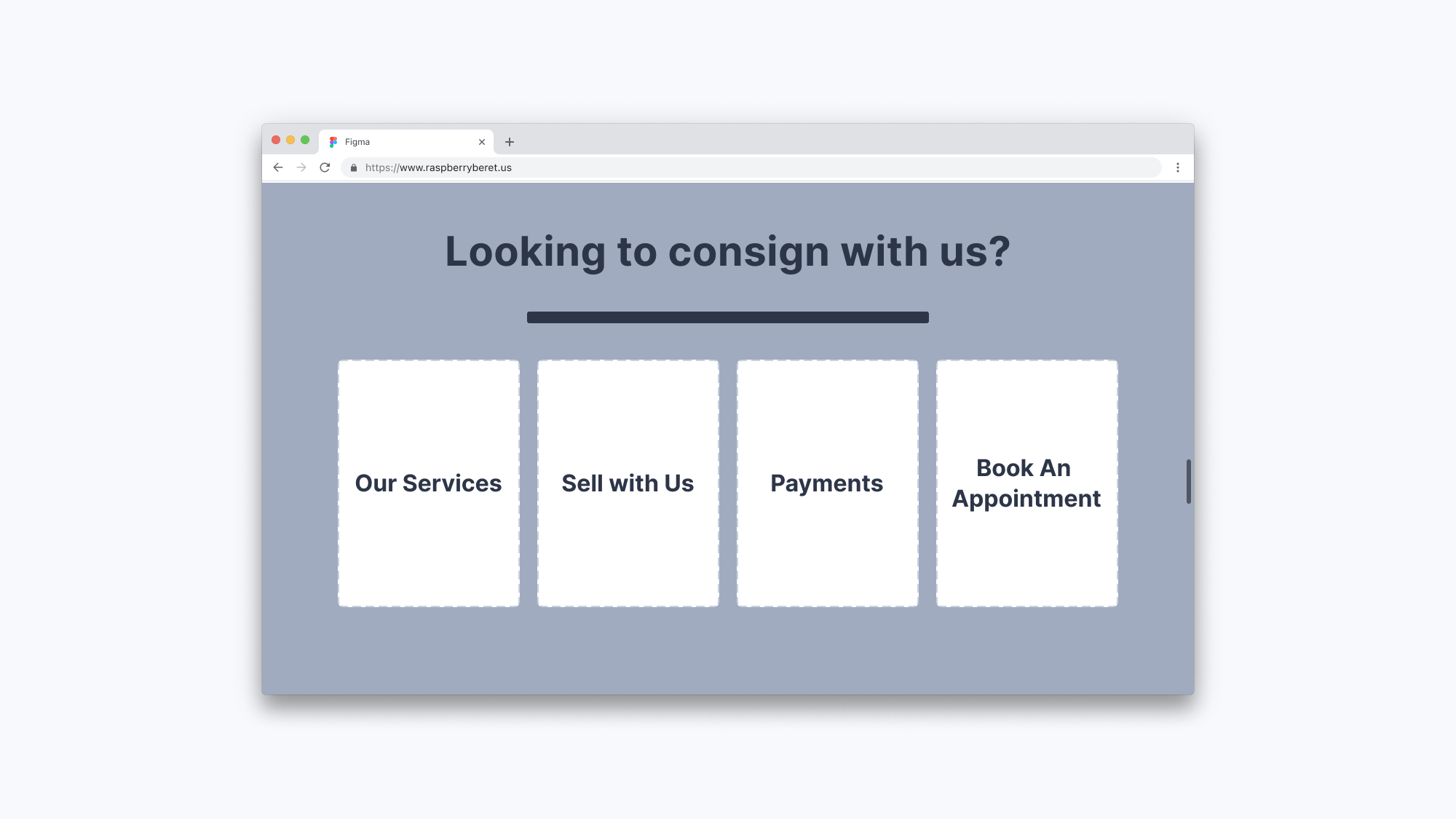
  • Navigation went from 14+ overwhelming tabs down to three clean items — Shop, Consignment, About Us. eBay, Etsy, and Poshmark were grouped instead of each getting their own tab.

  • The original pink palette was evolved into something more modern and vibrant — luxurious without losing the brand's personality. Leckerli One for the logo and brand voice, Avenir Book for clean readable body text. Product photography became the primary navigation tool, directly inspired by watching that user reach for the images during testing.


6

  • The Deliverables included digital logos, posters, stationery, merchandise, and mockups. It’s built to communicate consistently across all touch points.

  • I admired how the previous brand campaign paired sans serif and script typefaces effectively, so I continued the trend and made it my own.


7

  • Using different hues of pink to create a bold and colorful experience centered entirely around the cherry blossom.

  • Simplicity was always the goal. Some of the strongest brand identities in the world are the most subtle. Cherry blossoms are already beautiful enough to carry the design on their own.


Final logo and branding for the National Cherry Blossom Festival, featuring pink cherry blossoms on a dark background.

Final logo for the National Cherry Blossom Festival; a floral design on a dark background


Final logo and branding for the National Cherry Blossom Festival, featuring pink cherry blossoms on a light background.

Final logo for the National Cherry Blossom Festival; a floral design on a light background

Final logo and branding for the National Cherry Blossom Festival, featuring cursive writing on a light background.

Final logo for the National Cherry Blossom Festival; a Cursive design on a light background

 
Final logo and branding for the National Cherry Blossom Festival, featuring pink cherry blossoms on a burgundy background.

Final logo for the National Cherry Blossom Festival; a floral design on a burgundy background

Digital stationery of the festival featuring letterheads, books, and business cards.

Digital stationery of the festival featuring letterheads, books, and business cards


National Cherry Blossom Festival enamel pins

National Cherry Blossom Festival enamel pins

National Cherry Blossom Festival pink t-shirt

National Cherry Blossom Festival pink tshirt

 
National Cherry Blossom Festival enamel pins

National Cherry Blossom Festival enamel pins

National Cherry Blossom Festival pink tote bag

National Cherry Blossom Festival pink tote bag

 
Digital poster for the event, showing a large cherry blossoms and event dates.

Digital poster of the National Cherry Blossom Festival


Digital mockup of the poster in public advertisement.

Digital mockup of the poster in public advertisement


Test


8

  • Presented the completed brand system for expert critique and professor feedback.

  • Key feedback pushed me to set the cherry blossom as the heart of the entire design system.

  • Exploring the flowers’ beauty to create a colorful, sensory experience rather than over-complicating the idea.

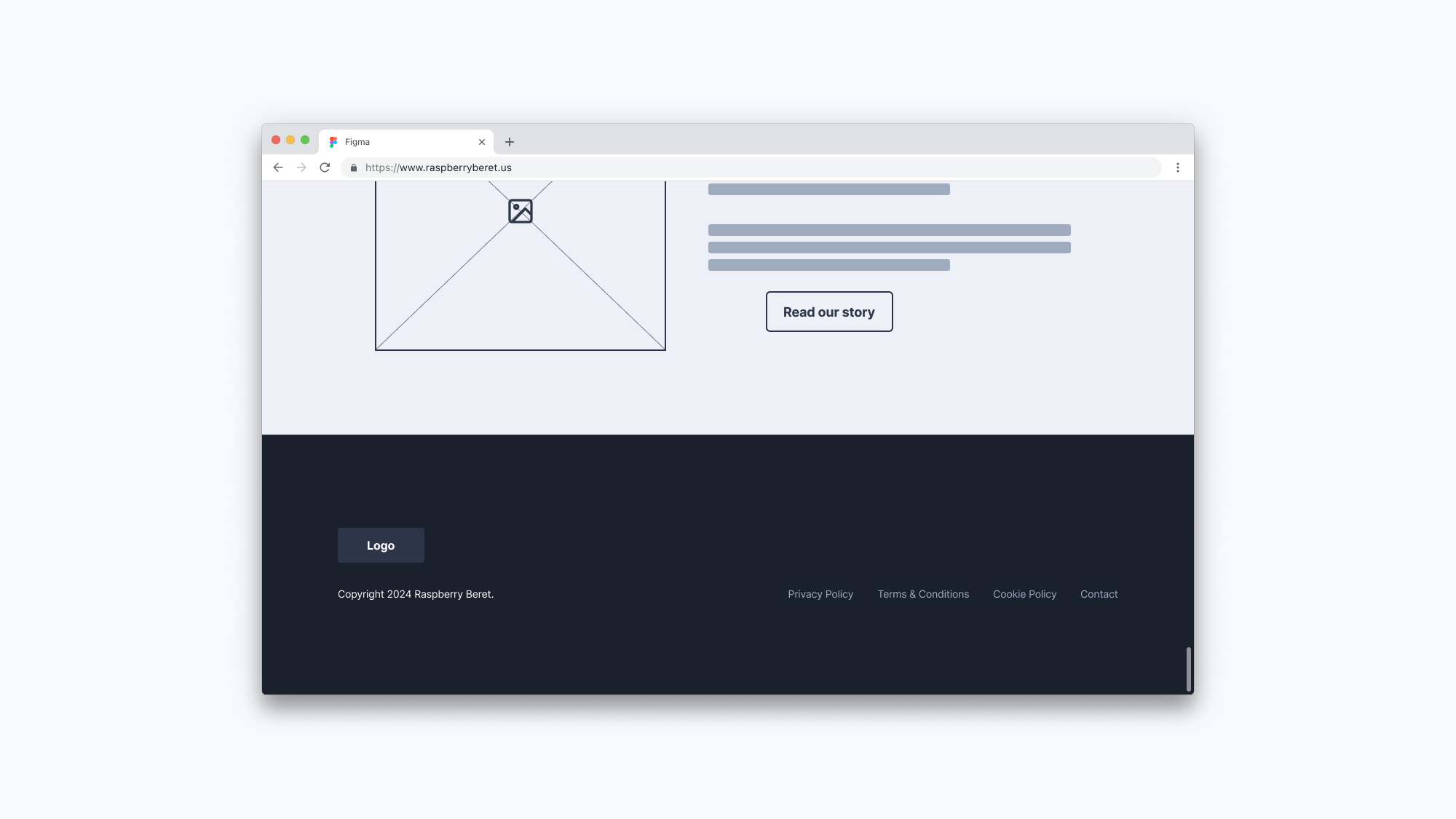
  • The paper prototype was intentionally rough — a quick brainstorm to establish basic structure. As the team gathered more data, the gaps filled in. The low-fidelity wireframes refined the architecture and the high-fidelity prototype brought the full brand system to life.

  • Every major design decision traced back to something observed during usability testing. The consolidated navigation, the pictorial shop, the image-as-link approach — all of it came from watching real people struggle with the original site.

  • One thing I'd do differently — if project constraints allowed, I would have expanded the usability test beyond 3 participants. More voices would have meant more confidence in the decisions. But with what we had, the results were clear enough to act on.


9

  • I was also challenged to think carefully about the political sensitivity of the Japanese-American cultural exchange — making sure the brand celebrated the relationship respectfully without reducing it to a superficial aesthetic.

  • The final system — modern typefaces, minimal floral elements, and a bold pink palette — created a sophisticated identity that honors its roots while speaking to contemporary audiences.


10

  • The final system — modern typefaces, minimal floral elements, and a bold pink palette built from different hues — created a sophisticated identity that honors its roots while feeling completely contemporary.

  • Key feedback pushed me to focus on the cherry blossom as the emotional and visual anchor of the entire system — leaning into its beauty to create a colorful, sensory experience rather than overcomplicating the concept.

  • I was also challenged to think carefully about the political sensitivity of the Japanese-American cultural exchange — making sure the brand celebrated the relationship respectfully without reducing it to a superficial aesthetic.

  • The final system — modern typefaces, minimal floral elements, and a bold pink palette built from different hues — created a sophisticated identity that honors its roots while feeling completely contemporary.


Nikkia Prim